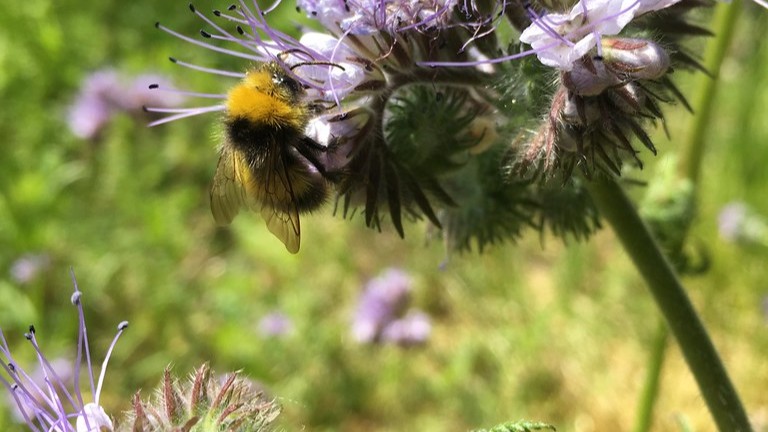
Pollination is essential for plant reproduction, but pollinating insects such as bees, wasps and butterflies are under threat. They are affected by climate change, pesticides, disease, and the way land is used for agriculture. Perhaps the biggest problem for pollinators is modern, intensive farming.
‘Unless we change our ways of producing food, insects as a whole will go down the path of extinction in a few decades. The repercussions this will have for the planet’s ecosystems are catastrophic.’ (Journal of Biological Conservation, 2019)
At OrganicLea, we are dedicated to growing food and caring for our Hawkwood Nursery site in a way that helps pollinators and supports biodiversity more broadly too. We also support support and inspire others to do the same.
Pollinators at Hawkwood
We manage our 12-acre Hawkwood site as a place for people, plants and wildlife. It is a community farm where we grow food, but we also we also create spaces for flowers, trees and food and habitats for insects and animals. We support the wild pollinators living on site, and care for the honeybees living in our hives.
Having lots of different insects on site is really important for pollinating our crops. Pollinators at Hawkwood Nursery include honeybees, solitary bees, bumblebees, wasps, ants, flies – including bee flies and hoverflies – butterflies, moths and some beetles.
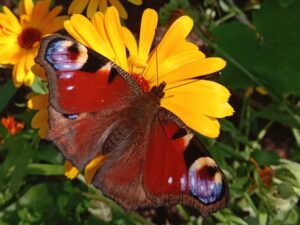
We’ve set up wildflower meadows, ponds, and companion flowers and trees to give pollinators homes and food. We never use pesticides or insecticides, and we’ve built dedicated homes for bumblebees and solitary bees. Our cut flower scheme helps us to continue growing the flower strips that provide a vital food source for pollinator insects.
Honeybees at Hawkwood
We’ve had honeybee hives on site since 2009, set up by former co-op member and beekeeper Sean Hearn. The hives are in a dedicated apiary in the northern corner of our 12-acre plot. The bees travel up to 3km to forage for nectar and pollen on warm, sunny days.
We use Warre hives, which are designed to replicate the natural home of wild honeybees as closely as possible. The hives let the bees build their own comb and minimise disturbance to the insects. That way, the bees look after themselves, and we can check on them without causing them stress.
Whenever we build hives, we use sustainable materials where possible, and avoid many of the practices used to maximise honey production, such as swarm suppression and sugar feeding. We only harvest small amounts of wax and propolis for products we sell, and only take honey if there’s more than the bees need — most years, we don’t harvest any at all.
BeeWild and WalthamWild
Since 2018, thanks to funding from the National Lottery Heritage Fund, we have been able to do more to help wild pollinators and honeybees at Hawkwood and in the wider community. Through our BeeWild project (2018-20) we scaled up pollinator support at Hawkwood and raised awareness of the importance of pollinators through volunteering, training, printed materials, open days and plant giveaways.
Our WalthamWild project takes this learning further, supporting partner projects in the Waltham Forest Food Growers Network to make and implement biodiversity plans for their own sites, and supporting people to be part of collective action in their neighbourhoods to protect pollinators and other invertebrates, and help mitigate threats of climate change.
We continue to teach people how to garden in ways that encourage greater biodiversity, and how to do wildlife surveys. These are an important tool for monitoring whether our actions are effective. We also continue to distribute pollinator-friendly plants across Waltham Forest and to involve volunteers in carrying out wildlife surveys at our community farm.
If you’re interested to learn more or get involved watch our short film about what we do for pollinators, or come and volunteer at Hawkwood.