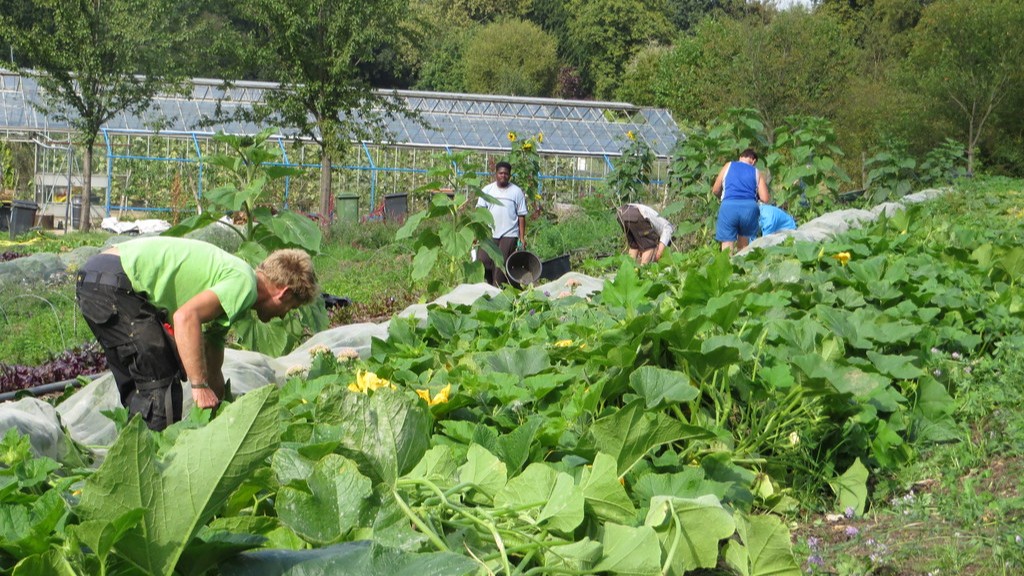
OrganicLea is creating a fair, sustainable food system in north-east London and beyond.
We work towards a system that’s fair for everyone and good for the planet. We believe that land, seeds and water shouldn’t be controlled by big companies or markets, but by people in the community. Our goal is to help create networks that support local growers, pay them fairly, and provide healthy, fresh, sustainable produce.
Better access to land, seeds and water
Finding land, seeds and water can be a challenge for smaller food producers. That’s why we’re committed to breaking down barriers so more people can grow food locally. This is fundamental to the OrganicLea ethical framework:
- Small-scale food producers should have the chance to use and control land for food growing without any discrimination.
- Skills for small-scale food production should be shared widely across the community.
- Access to a wide variety of seeds, and the rights to save, sow and exchange seeds are essential to food growing and to the maintenance of agricultural biodiversity, which is a foundation stone of resilient food systems. Growers have the right to save, use and sell their own seeds, instead of having to rely on commercial seed companies or risk genetically modified contamination.
- Water is a resource for everyone. It should be managed locally, fairly and sustainably, and with a focus on people growing food in an eco-friendly way.
Considering land justice
It is impossible to think about land for food growing without considering the complex history of land access more broadly. The UK has one of the most unequal systems of land ownership and access.
Land justice identifies land as the source of power and wealth, and that its enclosure or privatisation are key to class and racial oppression, and ecological destruction. The issue of land access links struggles for housing, food, access to nature, reparations, community space and environmental justice.
Local, fair and sustainable food systems
At OrganicLea, we believe in keeping food as local as possible. When food is grown, bought and eaten close to home, it’s fresh, good for the environment and supports the local economy. We believe:
- Food should travel as little as possible from the field to your plate.
- Local, small-scale producers should handle growing, processing and selling food.
- Everyone who works in the food system should have fair pay and good working conditions. Ideally, these enterprises should be run by the workers or the community.
The Landworkers’ Alliance is our union of landworkers and allies, offering solidarity, training, and lobbying muscle to support agroecological farmers, foresters and small-scale and community growers.
Growing food sustainably
Sustainable food growing works with nature, using ideas such as permaculture. At OrganicLea we focus on:
- Promoting soil health through natural methods, for strong plants and nourishing food.
- Using natural resources carefully and minimising outside inputs.
- Avoiding chemical fertilisers and pesticides.
- Protecting wildlife and encouraging biodiversity.
- Saying no to genetically modified organisms (GMOs).
We also believe that eating less meat and more plants is better for the planet, animal welfare and our health.
Reducing plastic waste is another priority. Most produce deliveries are in re-useable plastic crates that are returned to the farmers they came from. And we encourage customers to bring their own bags to take away what they buy – from crate to rucksack! We reuse plastic bags and plant pots, and find the plastic boxes mushrooms are delivered in make great containers for salad growing.
We support low-impact transport in several ways:
- Our box scheme and other deliveries/collections are via our electric van and cargo bikes, with the help of ZED Waltham Forest.
- We encourage our box scheme members to pick up their fruit and veg by public transport, on foot or bicycle, or to arrange a car share.
- We support cycling to our site and events, and offer Dr Bike support to volunteers.
- We provide information about public transport and walking routes through the forest to our community farm.
Social justice for everyone
For us, social justice involves building a society based on equality, inclusion and meeting people’s needs instead of prioritising profit. We challenge discrimination in all its forms, and give everyone a voice.
We want a world based on co-operation and fairness, where people can take charge of their own lives. By working together and supporting each other, OrganicLea members challenge the unjust food system and inspire others to do the same.
Around the globe, food crises often come from big companies controlling what we eat, poverty, and policies that treat food as just another product to sell.
Small-scale growers are key to keeping farming diverse and sustainable, and they produce food that suits their local communities. Unfortunately, these smaller farmers don’t always get the recognition or support they deserve from government policies.
Being able to grow food in a sustainable way is vital if we want to end hunger now and for future generations. Industrial farming isn’t working for our environment or our communities.
That’s why alternatives like community food systems—based on caring for the land and making decisions locally—give us hope. But these approaches need active support and more people working together if we want them to thrive and offer a real alternative to large-scale industrial agriculture.
What is food sovereignty?
In the early 1990s, small organisations defending the livelihoods of peasant farmers in South America united to form La Via Campesina. It is now a global organisation representing more than 200 million small-scale farmers and food producers.
La Via Campesina developed the concept of food sovereignty as a practical basis for rebuilding our food system. It challenges the corporate-dominated, market driven model of globalised food production and distribution.
Food sovereignty calls for the right to food controlled by and for people and communities, not for big business, elites or private profit. The purpose of the food system should be to feed the population in a way that is equitable and sustainable, and this can only happen by local food systems.
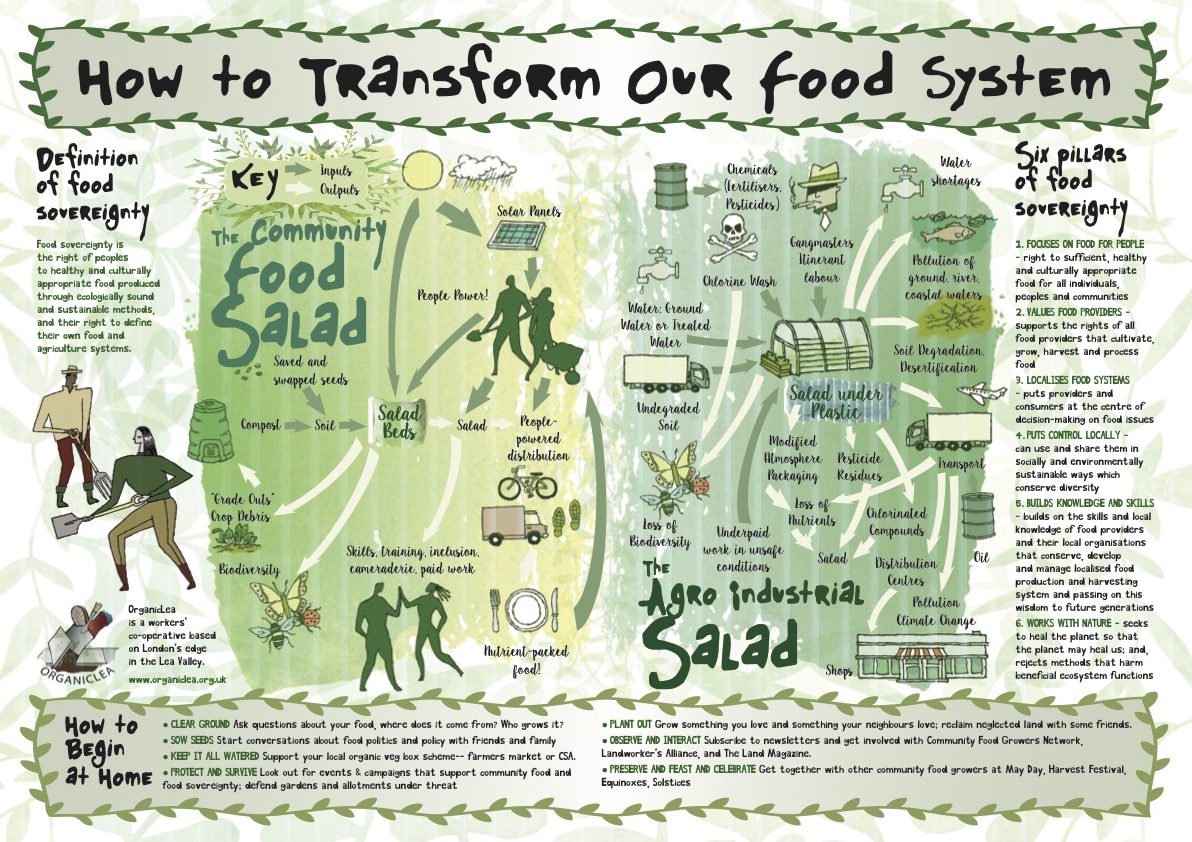
These bring producers and consumers closer together in a system that is locally controlled by them, that reduces environmental damage, values food providers, and builds knowledge and skills around food growing. The demands of food sovereignty inevitably include a call for new patterns of land ownership and land distribution as part of this shift to local democratic control of food production.