Thank you for taking an interest in the OrganicLea box scheme. Our customers asked a range of questions about the scheme over the many years we’ve been running it. So we thought it would be useful to provide answers to the most common questions below.
Plus, you’ll find advice on how to best store your fresh fruit and vegetables to keep them good to eat for longer.
You asked about the fruit and veg
Why are the vegetables so muddy?
Our organic veg is grown in healthy soil, which means they’re packed with good stuff like minerals and antioxidants.
The soil also helps keep them fresh for longer, so if we washed it all off, they’d spoil faster. Just give your veg a good scrub with a brush before you use them.
Why do we get carrots so often?
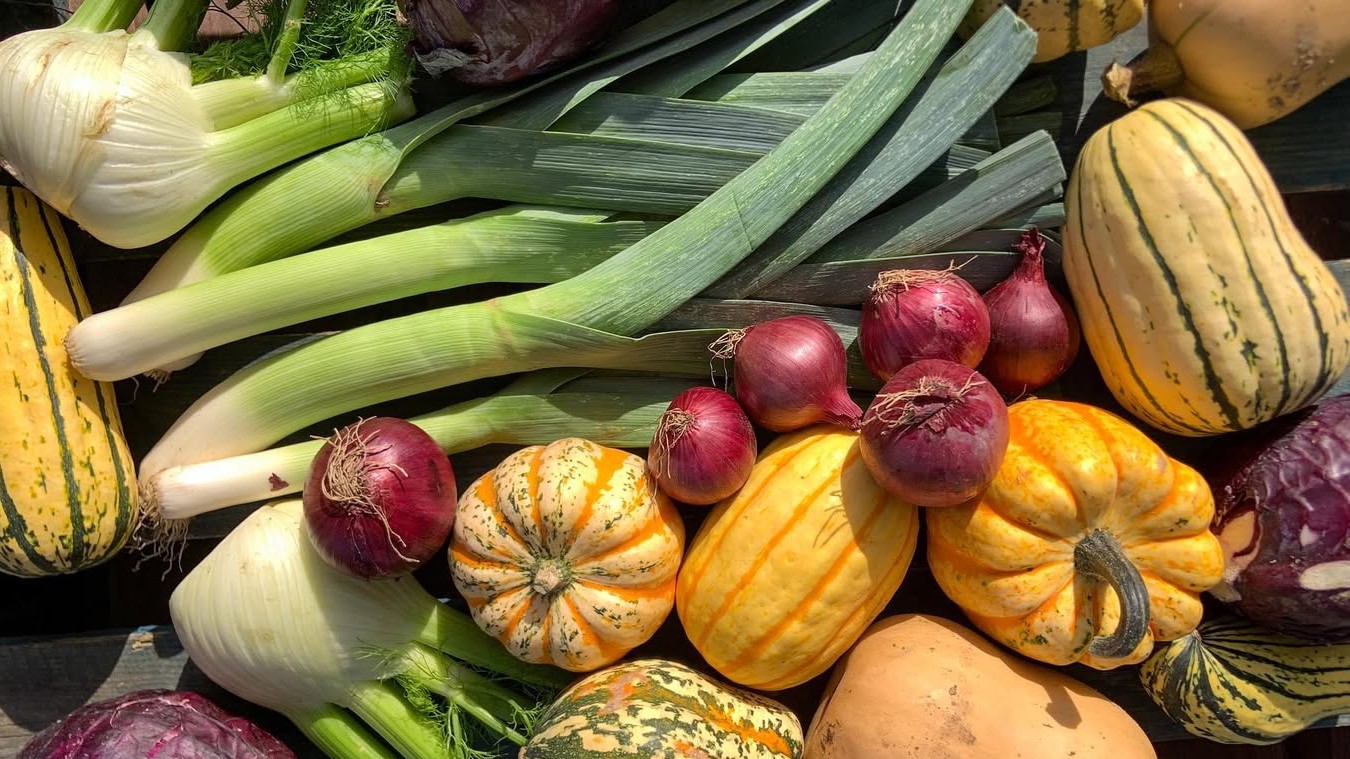
Potatoes, carrots and onions are the mainstays in our veg bags. They grow well in our climate and keep for ages, so we can offer them nearly all year round.
Carrots are great value, and that lets us spend more on other tasty treats for your bag. Plus, carrots are super versatile—eat them raw, juice them, use them in soups or desserts—the list goes on.
Why is there so much root veg in winter?
We’re all used to seeing all sorts of veggies in shops year-round. But to get those out-of-season veg to the UK, they’re either flown in from far away, grown using lots of chemicals, or raised in heated greenhouses—none of which is great for the planet.
Local, seasonal food is tastier, healthier, and much better for the environment. Root veg like carrots, parsnips, beetroot, swede and celeriac have always been winter staples in the UK, so we stick with local growers whenever possible.
What if there’s a particular fruit or veg I can’t or don’t want to eat?
Please email us on box@organiclea.org.uk – we should be able to set up an exclusion so that you don’t receive the item and get a substitute instead.
I got a lettuce with brown leaves on the outside…
Sometimes your bag will have a loose lettuce instead of one in a bag. We choose loose to cut down on packaging. The brown leaves on the outside help protect the lettuce inside—just peel them off and the rest is good to eat.
Why does produce sometimes look old or past its best?
We always aim to get the freshest produce to you, but organic fruit and veg aren’t treated with chemicals, so they don’t always last as long.
Some crops—like root veg and squash—are picked in autumn and stored for months to get us through winter. So, beetroot in March might look different from fresh beetroot in July, but both are nutritious. Any differences are just cosmetic!
Why do my bags feel lighter in spring?
Spring brings the ‘hungry gap’—the tricky time when last year’s veg runs out before the new season starts, usually April to June.
Your bags might be lighter and have less variety, and we may add things like locally grown dried pulses to keep things interesting. It’s all part of eating seasonally in the UK, and we keep supporting local farmers during this period.
Why aren’t there more berries in the fruit bags?
The UK fruit season is short. Apples are around from mid-August to March, pears for even less time.
At Hawkwood we grow plums, greengages, peaches, apricots, strawberries and more, but sometimes they are too delicate or not grown in big enough quantities for us to include them regularly.
Why am I sent fruit that’s unripe?
Sometimes you’ll get avocados, pears or kiwis that aren’t ripe yet. They travel better that way and will ripen at home if you keep them in a warm, dark spot (putting them in a bag helps speed things up).
You asked about payments
How does the solidarity payment scheme work?
If you can pay a little more to help subsidise a veg bag for someone who needs help, then you can choose to make an extra payment. You’ll find more details on how the scheme works on the bag sizes and prices page.
You asked about the packaging
Can I return my packaging to you?
Yes, please! Leave your packaging at your pick-up point when you collect your next bag, and we’ll reuse it.
Why do the salad and other greens come in plastic bags?
Sadly, there’s no perfect replacement for plastic bags yet when it comes to keeping delicate greens fresh.
Paper and compostable bags soak up moisture, making the leaves go limp quicker. We’ve tried lots of alternatives, but they led to too much food waste. We’re always looking for new options, though!
When we can, we use rubber bands for sturdy greens instead of bags. Remember, plastic bags can often be cleaned and reused, and Waltham Forest Council now recycles clean plastic bags. But recycling should be the last resort.
Some of the bags are marked as compostable, but I’m not sure about the others…
If the bag says ‘home compostable’, pop it in your compost or food waste bin, or if not, your regular rubbish bin. Other plastic bags should be cleaned and reused, returned to us, or put in your recycling.
Storing organic fruit and veg
Organic fruit and vegetables haven’t been chemically treated and so need to be stored correctly to help get the best life from it and avoid food waste.
- Potatoes and other root veg
The most important thing is to keep them cool and dark. Ideally, never wash your veg before storing. The soil acts as a natural preservative and washing them will cause them to go off far quicker. Keep them wrapped in brown paper and somewhere like a cool, dark cupboard or bottom of your fridge. If stored correctly your spuds will last many months, and if they begin to sprout, don’t worry they are still edible, just knock the eyes off. - Beetroot
Keep in the fridge, where they stay solid for longer. - Leafy greens
Keep in the fridge. Wrapping in plastic will also help to keep them succulent and fresh. - Onions
Store in a cool, dry and airy place. - Squash
Store at room temperature with air circulation. Too much moisture may cause them to go off. If you do notice mould, cut it off and the remaining squash will still be good to eat. - Oranges, lemons, grapefruit, and apples
Keep in a cool room for at least a week. In a hot room they could go off very quickly. Apples kept cool and dark will last much longer. - Kiwis
These are usually unripe and will ripen slowly in a warm (16C) room. You can feel when they are starting to get soft they are usually at their best, this could take several weeks sometimes depending on the condition they arrive in. - Bananas
This fruit has to be harvested green for their 7-10 day boat trip. On arrival in UK they go into special ripening stores where they are held at 14C. Usually they come to us ready ripened with just a hint of green, which allows a few days for use. Sometimes due to problems of supply shortages they may not have been fully ripened before they arrive with us so we have to send them out green. They will ripen providing you wrap them in plastic, place in dark place and keep at 14C.
They will ripen within a week or so. At cooler temperatures they will slowly ripen but loose flavour and become woody. Skin colour is not necessarily an indication of ripeness. The very richest flavour will be attained if the skin has dark brown spots all over it. - Avocados and mangos
Store at room temperature and do not squeeze the flesh as this will cause the fruit to become bruised and rot.